From Legislation to Practice: Lessons from Idaho’s Internationally Trained Physician Pathway

Nowhere in America is the national health care worker shortage more acute than in Idaho. It currently ranks lowest in the country in physicians per capita. Idaho’s health care workforce, like that of many rural states, is shrinking faster than it can be replaced.
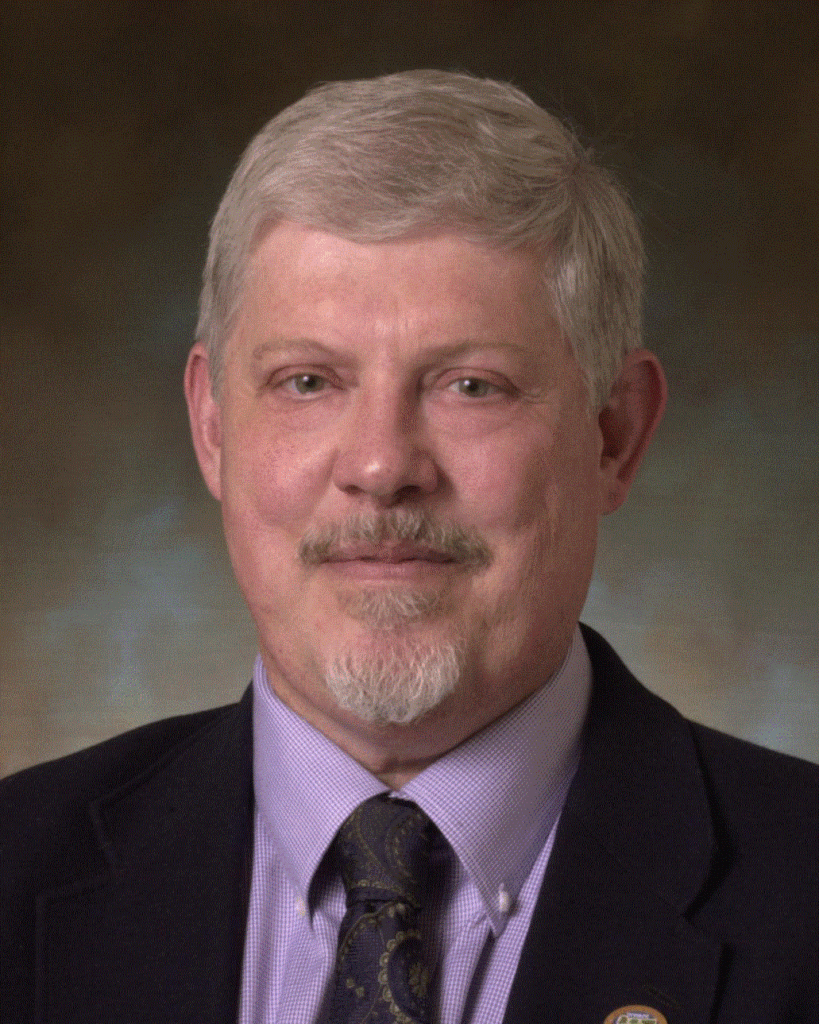
Against that backdrop, Idaho passed legislation in 2024 to create an alternative licensing pathway for internationally trained physicians (ITPs), doctors who completed their medical education and residency abroad and have years of clinical experience but face significant barriers to practicing in the United States. Dr. Scott Smith is a retired internal medicine doctor, medical researcher, and professor emeritus at the University of Washington and has worked in residency program leadership in Idaho for 28 years. As a Global Talent Doctors mentor and consultant, Dr. Smith supported the drafting, passage, and now implementation of Idaho’s new pathway.
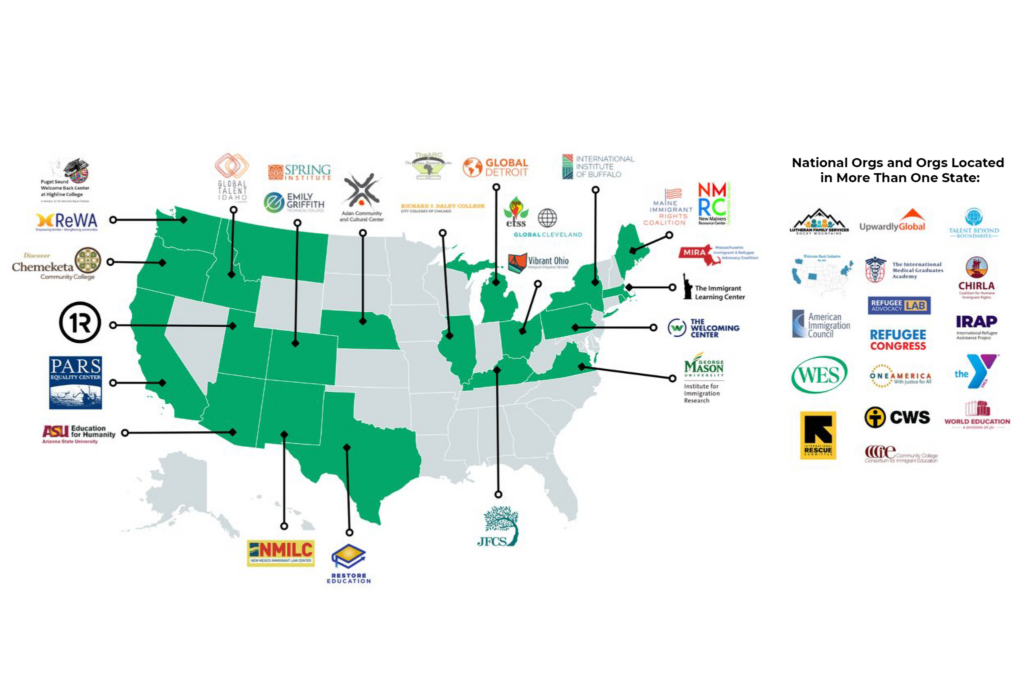
Global Talent is part of WES’ SIIP Demonstration Opportunity program, which provides participants with technical and financial assistance to increase their impact and capacity to develop replicable and scalable programs. The program’s final cohort focuses on alternative pathways to licensure for ITPs.
We asked Dr. Smith what he’s learned so far and what other states can take away from Idaho’s experience as they build their own pathways to moving these policies into practice.
Passing legislation to license internationally trained physicians is a significant milestone, but implementation has its own challenges. What do you wish more people understood about the challenges of bridging the good intentions of the law with the reality of licensing and community buy-in?
Honestly, even though this was my second time getting legislation passed in Idaho with Global Talent, I still didn’t completely understand the process after the bill passed. I knew the governor had to sign it, but that was the last thing I knew. After legislation is passed, administrative agencies usually go through a rulemaking process to implement, interpret, or further prescribe policy. It can be a lengthy process.
Implementation worked differently in Idaho, where we’re 50th in the nation for doctors per capita—we’re behind Guam. Idaho has lost roughly 35 percent of our OB-GYNs, and rural primary care has suffered too. When the accelerated pathways law passed, the governor didn’t want it to go through rulemaking, which can delay implementation. But we still wanted to gather input from all stakeholders and experts to make sure the candidates who could benefit from the bill are truly qualified to practice. We formed an advisory group that includes a former chair of the state Board of Medicine to align on standards and ensure stakeholders know how much education and experience ITPs are bringing to communities across our state.
The other thing I wish people appreciated is how skilled ITPs are. For years, the easiest answer to the question of how to get ITPs to practice in the U.S. was to make them do the same things U.S. graduates do—take all the licensing exams, do a full residency over again. That’s one way to protect quality, but it’s a pretty unfair way to treat people who’ve already done all of that successfully in their home countries. My whole argument has been that we need to balance our fiduciary responsibility to the public with fairness to the candidates. That’s basically how I got the law through.
As part of the SIIP Demonstration Opportunity, WES made an investment in implementation in Idaho, both financially and through technical assistance and program development. What impact did that investment have?
The networking has been really impactful. It was through a SIIP meeting that we got the idea to reach out to the Idaho Community Health Center Association, a statewide network of community health centers that are exactly the kind of sponsors we need to participate in hiring and supervising ITPs. They were intrigued by what we’re trying to do, and now Global Talent is going to table at their conference and spread the word about the pathway and how employers can hire ITPs.
Some of the funding has also given us flexibility to meet with potential sponsor groups—paying a tabling fee and getting into the right rooms. That kind of thing matters a lot when you’re trying to get a new idea in front of people who’ve never heard of it.
Hospital administrators want to solve their staffing shortages but may be cautious about being the first to hire ITPs through a new pathway. What would you want hospital leaders to know as they consider hiring ITPs?
What they’re understandably worried about is time and money. There’s research showing it costs somewhere between $150,000 and $200,000 a year to train a resident, even though their salary is typically about half that. In a standard three-year residency, it takes roughly 18 months before a resident crosses the break-even point—where their billing covers what they cost the institution. The way it works is pretty gradual. In the first six months, a resident sees one patient at a time and presents the case to their supervising physician to sign off. After six months, they might see three to four patients a day and present them all at the end of the day. By a year or year and a half, the supervisor is just reviewing charts after the fact—the resident is largely working independently, checking in when they have questions.
That whole ramp-up period is what makes residency expensive. For ITPs, that ramp is often dramatically compressed, because they’ve already been through it. We have early evidence of this here in Idaho. One of our earliest candidates, a cardiologist from Iraq, started a one-month observership in family medicine. Four days in, the team told him, “Stop presenting every patient, you’re beyond that.” That doesn’t happen for months in a normal residency.
Based on our experience, we expect these ITPs to break even in three to four months rather than 18 months. We can’t promise that yet—it’s still a hypothesis, and we need more data—but the early signals of a faster return on investment are encouraging. I always tell hospital leaders that the first few states that do this, the early adopters, are going to have their pick of some extraordinary talent.
There are people here who want to give back to their new communities. My wife and I helped an ITP here understand the residency process in the U.S., and he ended up in internal medicine. He’s brilliant, has outstanding scores, and is a wonderful person. I asked him what he liked about Boise, and he said he sleeps through the night here. In his home country, there was war and violence, but it is peaceful here. These are people who want to be here and have enormous talent and resilience.
ITPs are often highly motivated but have been waiting a long time. What does the waiting period cost, and how do we keep momentum alive?
What we mostly lose is candidates, because they time out. There are recency-of-practice requirements in most state laws, and if you’ve been out of practice too long, you become ineligible. It’s a hard cutoff that doesn’t account for why someone stepped away.
This is where having the state Board of Medicine as an advisory has been incredibly valuable. Not just for legitimacy, but for practical knowledge. They told us about professional organizations in the U.S. that can evaluate physicians who’ve been out of practice and vouch for their readiness. There are also assessments in Canada that work similarly. So having a readiness assessment is one of the ways that we could keep ITPs in the pipeline after they pass the cutoff point.
On the human side, we celebrate wins. We have two candidates who matched into residency this year, so we plan to throw a party and invite everyone in our cohort so they can ask questions. We also do get-togethers that are purely social—potluck dinners where everyone makes a dish from their culture. When you have 15 people from around the world, the food is extraordinary. And it keeps people connected to each other and the work.
Many stakeholders need to be involved in a new pathway. Who are the key players, and what advice would you have for working with a coalition?
When I was preparing the legislation, I pulled in the state Board of Medicine, the Idaho Medical Association, the Idaho Hospital Association, major hospital systems, large insurance companies, the Department of Professional Licensing, and yes, the naysayers. I listened to all of them.
Now, in implementation, the groups I’m most focused on are the sponsors, the organizations that will actually hire and supervise these physicians, and the preceptors, the individual doctors willing to supervise them day-to-day. Finding sponsors and communicating the long-term benefit of these ITPs is really important.
One group I didn’t anticipate needing was the specialty boards. None of our ITPs were interested in this alternative licensure pathway because they wouldn’t be eligible to specialize and obtain board certification, which limits hospital privileges, comes with lower reimbursement rates, and incurs more expensive malpractice insurance. So we’ve spent months working with the American Board of Family Medicine to see if we can run a pilot program allowing our first candidates to sit for the boards. This could be a replicable solution that would allow ITPs to practice in other specialties as well.
That conversation wouldn’t have happened without existing relationships. My advice is to invest in those relationships before you need them.
For states early in the process—still building coalitions, drafting legislation, or just beginning to engage hospitals—what advice do you have?
Write the law well enough that the people who have to implement it trust it. The reason the American Board of Family Medicine is considering our pilot is because I wrote the pathway to look like a U.S. residency. I was told it was trusted because it looks like something they recognize.
“Understand this is a marathon. The legislation is just the start, not the finish line.”
Get the medical board involved early as an advisor. They have practical knowledge and they became champions for this because they were part of it.
Understand this is a marathon. The legislation is just the start, not the finish line. Rulemaking, stakeholder buy-in, curriculum development, board certification, employer outreach—each one is its own project.
And finally, the goal is to build incrementally. Get the first two or three candidates through successfully. Document it and use those data points to go back to the legislature to ask for adjustments. That’s the long game. Our little team of five in Idaho can’t do it alone, but we can get a good shot at the start and then work in coalition with other states to build something that lasts.
Idaho’s path to becoming a destination for qualified ITPs hoping to enter the health care workforce faster holds real lessons for other states. Among the most important: bring in stakeholders early, treat the bill signing as an initial step instead of the finish line, and maintain momentum.
WES supports states throughout their journey to pass and implement ITP legislation. Explore our policy tracker to follow legislation across all 50 states, a policy comparison chart on legislation states are pursuing, and our ITP policy recommendations. Email any questions or requests for support to [email protected].


Want to stay in the loop?
Sign up for our Newsletter. We’ll share updates, what we’re learning, and opportunities through our email list.